Gas Line Installation & Repair
Code-compliant black steel and CSST gas piping for ranges, water heaters and generators — installed, pressure tested and permitted the right way.
When to Call for Gas Line Service
Gas work is not a DIY job — a small mistake can be dangerous. Call us immediately if you notice any of the following:
- A rotten-egg or sulfur smell near appliances or the meter
- A hissing sound near gas lines or fittings
- A weak or yellow (instead of blue) flame on gas appliances
- You're adding a range, dryer, water heater or generator
- Visible corrosion on exposed gas piping
Materials & Installation Standards
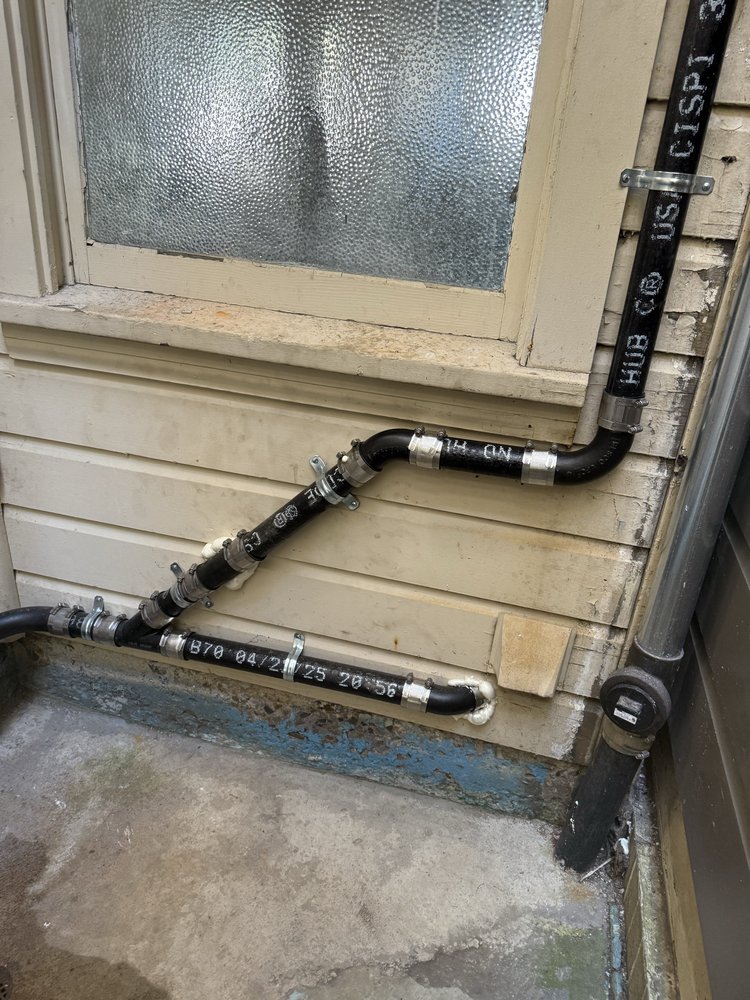
We run gas lines in black steel or CSST (corrugated stainless steel tubing) depending on the application, and every joint is labeled, clamped and pressure tested before it's approved for use.
- Black steel piping — the traditional standard for durability on exterior and interior runs.
- CSST tubing — flexible, fast to route through walls and framing on remodels.
- Pressure testing — every new run is tested and held to spec before appliances are connected.
- Permitting — we pull permits and coordinate city inspection sign-off for you.
Our Gas Line Process
Every job starts with a safety check and scope walk-through, followed by a flat-rate quote, permitted installation or repair, a full pressure test, and final documentation so you have records for inspection or resale.
FAQ
Gas Line Questions, Answered
No. Gas line work requires a licensed plumber, permits and a pressure test before the line can be put into service. Our technicians handle the full process, including inspection sign-off.
Yes, most gas line installations and alterations in Los Angeles require a permit. We pull permits and coordinate inspections as part of every gas line job.
Leave the property immediately, avoid switches or flames, and call your gas utility and our 24/7 emergency line from a safe distance.
Get a Free Gas Line Quote
Permitted, pressure-tested, code-compliant installation.